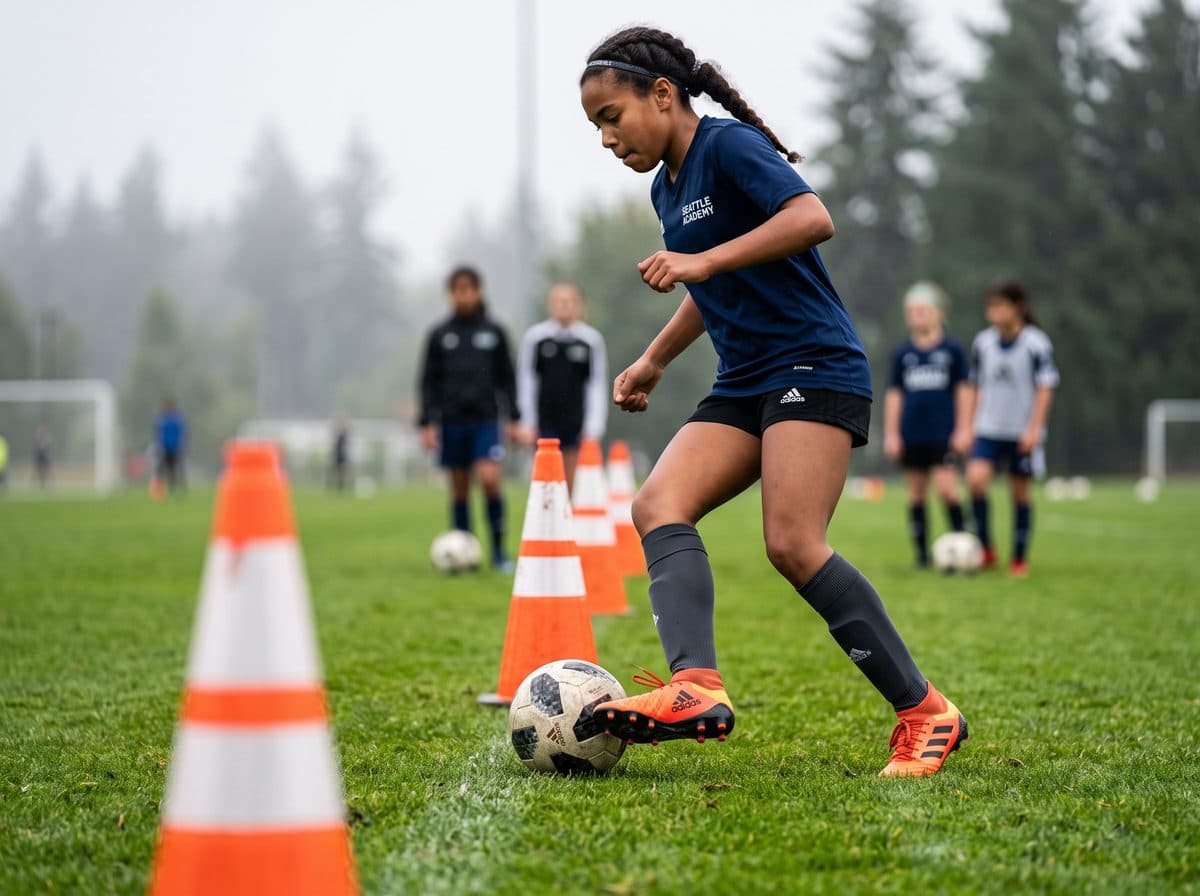
Player Pathway
A structured route from first touch to final season
Every age group in the ASL sits within a development stage with its own priorities, competition format and coaching emphasis.
The stages
U7 through U18
U7 – U9
Foundation
Fundamental movement, ball mastery, love of the game
U10 – U12
Learning to Train
Technique under pressure, first tactical concepts
U13 – U15
Training to Train
Physical development, position-specific skill, game intelligence
U16 – U18
Training to Compete
Competitive performance, resilience, next-step pathways
Stage detail
What changes at each stage
U7 – U9 · Foundation
- Small-sided formats with high ball contact
- Coordination, balance and confidence on the ball
- No standings recorded — every player plays
U10 – U12 · Learning to Train
- A reliable technical base under pressure
- Space, support and decision-making
- Positional rotation over early specialisation
U13 – U15 · Training to Train
- The widest growth differences — where bio-banding pays most
- Training load managed against maturation, not birth year
U16 – U18 · Training to Compete
- Full-format competition with tactical depth
- Support toward post-secondary, senior amateur and professional pathways
Why it is built this way
Four principles behind the pathway
Grouped by body, not birthday
Bio-banding places players by physical maturity where the spread is widest, so a match is a contest rather than a mismatch.
Formats that fit the stage
Small-sided football at the youngest ages gives every player far more touches; format and squad size scale up with the age group.
Technique before tactics
A reliable technical base is built first. Tactical complexity is introduced once players can execute under pressure, not before.
No early specialisation
Positional rotation is encouraged through the developmental stages. Players who specialise late keep more doors open, for longer.
What happens after U18
The final stage is built to hand players on rather than to end. Academies support players toward post-secondary programs, senior amateur football and, where the level warrants it, professional trials.
BCSAA does not place players itself. What it does is make the record legible — a player who has come through a licensed academy in a sanctioned league has a season history that a recruiter can actually read.
Post-secondary
Senior amateur
Professional trials
Get your child on the pathway
Families register directly with BCSAA to play — no academy membership needed. Academies looking to join the pathway can apply for a licence.