SafeSport & Child Protection
Every child, safe at every session
A single enforceable safeguarding standard across every member academy and every Academy Super League fixture — published in full, and binding on everyone who works with our players.
Safeguarding is a condition of membership, not an aspiration
BCSAA adopted its SafeSport & Child Protection Policy on October 23, 2025. It is a thirteen-part document and it applies to every member academy, every coach, every official, every volunteer and every parent involved in our programs.
An academy cannot hold a BCSAA licence without complying with it. Personnel who have not been screened and certified do not work with our players. Venues without an emergency action plan and accessible first aid do not host our fixtures.
The framework
Six pillars of athlete protection
Background Screening
Every coach, official, volunteer and staff member in contact with youth players must complete a Criminal Record Check with vulnerable sector screening. Records are held by the academy and are subject to audit.
Ethics & Safety Training
Respect in Sport certification is mandatory for all personnel — ethical conduct, recognising and responding to abuse and maltreatment, and building positive sport environments.
Conduct & the Rule of Two
One code binds players, coaches, officials, parents and spectators. A youth athlete is never alone with a single screened adult: two must be present, or the interaction must be observable and interruptible.
Concussion & Return to Play
Any player with a suspected concussion is removed immediately and may not return the same day. Return follows a documented graduated protocol and requires medical clearance.
Injury Reporting & Emergency Planning
Every venue must have a written Emergency Action Plan, an accessible and stocked first aid kit, and identified personnel responsible for emergency response.
Complaints & Investigation
A designated SafeSport Officer is the single point of contact. Complaints are documented, investigated fairly, and resolved with written notice and a genuine opportunity to be heard.
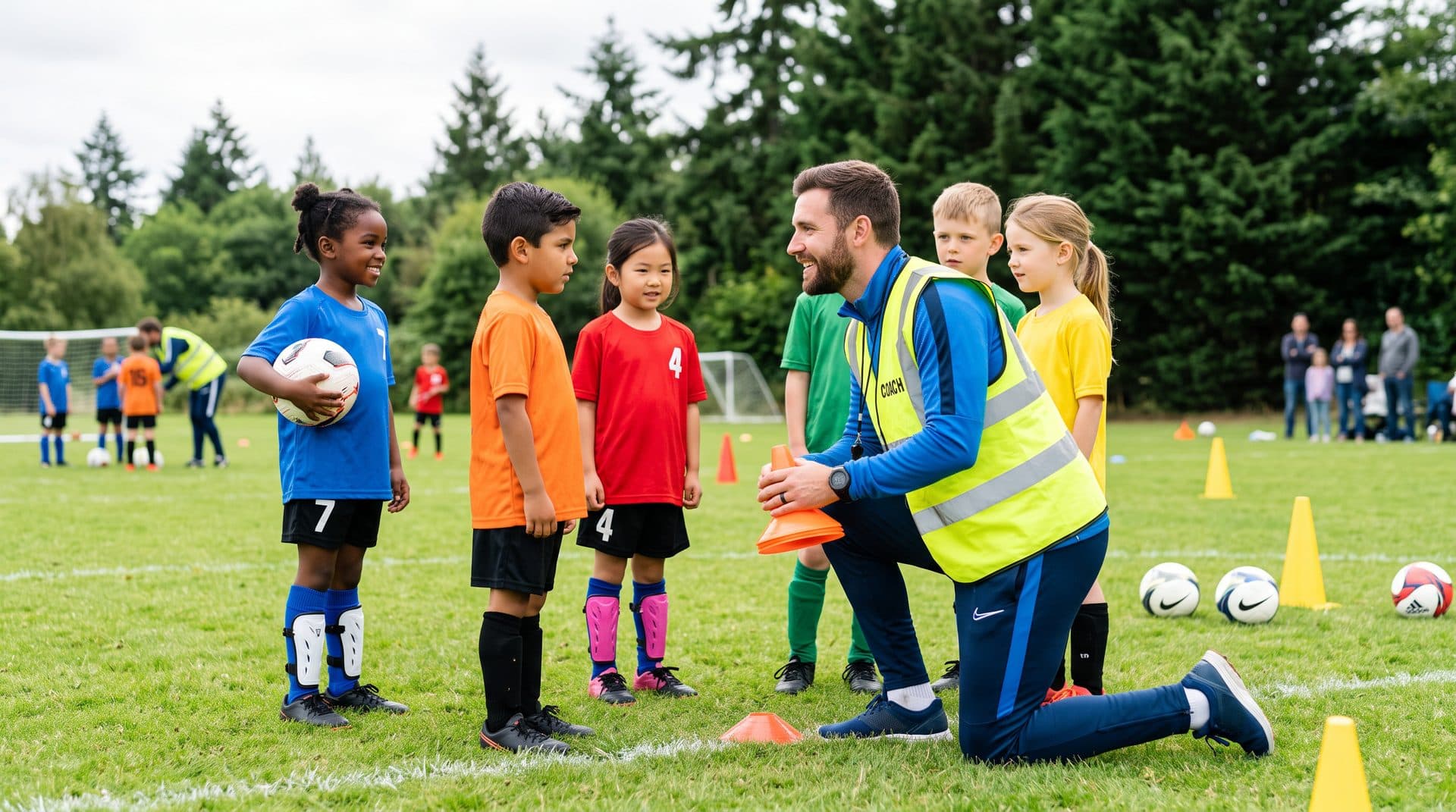
A young athlete is never alone with one adult
Two screened adults must be present with a youth athlete, or the interaction must be observable and interruptible. It applies in the changing room, in the car, in a message thread and on the training pitch.
It is the single most effective safeguarding control in youth sport because it removes the private situation in which harm happens, rather than relying on detecting harm afterwards.
Two screened adults
Observable
Interruptible
No exceptions
Concussion protocol
Concussion recognition and return to play
Mandatory across every member academy and every fixture. No stage may be skipped and no timeline shortened.
Immediate removal
A player with a suspected concussion is removed from play at once and does not return the same day — no exceptions, regardless of the score or the stage of the match.
Medical assessment
The player is referred for assessment by a qualified medical professional. The academy notifies the parent or guardian.
Rest, then light activity
An initial period of relative rest, followed by light activity that does not provoke symptoms.
Graduated return
Light aerobic exercise, then sport-specific exercise, then non-contact drills — one stage at a time, with at least 24 hours between stages.
Medical clearance
Written medical clearance is required before the player resumes full-contact practice.
Return to play
Only after clearance and a symptom-free full-contact session may the player return to competitive matches.
At every venue
Injury reporting and emergency planning
A fixture is not sanctioned unless the host academy can show all of this for the venue it is played at.
Before anyone plays
- A written Emergency Action Plan specific to that venue
- Emergency access routes and the nearest hospital identified
- A stocked, accessible first aid kit at every session
- Named personnel responsible for emergency response, on site
When something happens
- Injuries are reported to the association through a prescribed procedure
- The report is recorded in writing, with date and circumstances
- Parents or guardians are notified by the academy
- Patterns across academies are visible to the association, not just to one club
Reporting
How to report
Anyone may raise a concern — a player, parent, coach, official or bystander.
What happens
- Reports go to the designated SafeSport Officer, the single point of contact
- Every report is recorded in writing, with date, parties and the nature of the concern
- The person complained about receives written notice and a genuine opportunity to respond
And where it goes
- Where a concern involves a child at risk of harm, it is reported to the appropriate authorities
- Outcomes are documented and communicated to the parties
- The process is set out in full in the published policy
Transparency
Read it in full
The policies are published complete rather than summarised. Thirteen-part SafeSport, adopted 23 October 2025, and Equity & Inclusion — both binding on every member academy.
SafeSport Policy · 13 parts
Screening, training, code of conduct, concussion and return-to-play protocol, injury reporting and the complaints process.
Equity & Inclusion Policy
Standards for safe, respectful, inclusive academy soccer — non-discrimination, accommodation, and how to report.
Safeguarding questions from your academy or family?
The SafeSport Officer can be reached directly, and the policy is published in full.